The Short Answer先说结论

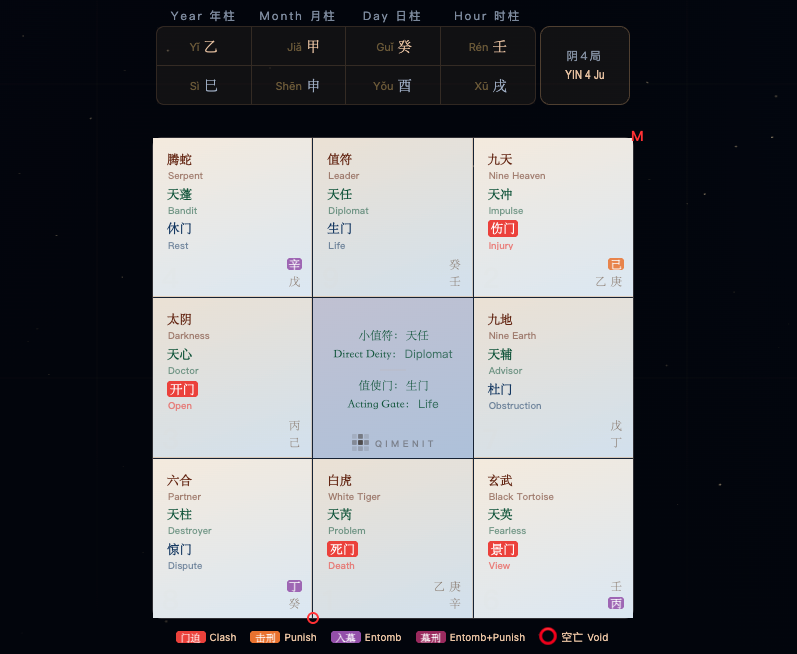
A relocation chart is read in three passes, and the first settles more than people expect: is there a genuine signal to move at all? That is what the Horse Star answers, and a chart without one suggests the urge to leave arises from somewhere other than your circumstances. If the signal is there, we compare the two places: the Duty Chief stands for the new home, the Duty Messenger for the old one. Then comes the pass that decides how you fare once the boxes are unpacked: the relation between you (the Day Stem) and the dwelling you are moving into (the Hour Stem). A place can be better by every outside measure and still not suit the person going there.

断搬迁分三层,而第一层比多数人以为的更能定事:盘上到底有没有该动的理由?这一问由马星回答。盘上不见动象,多说明想走的念头另有来处,未必出自你的处境。若动象确在,再比两处:值符为新宅,值使为旧宅。最后一层,决定你安顿之后过得如何:你(日干)与将要住进去的那座宅(时干)之间的生克。一个地方可以样样都更好,却仍旧不合要去的这个人。

First: Is There a Reason to Move at All第一层:到底有没有该动的理由

Before weighing two cities, we look for the Horse Star, the symbol that marks movement. It answers a question people rarely put to themselves: does this chart show a change in the making, or only a wish for one? Where the Horse Star is active and clashes your palace, movement is genuinely in the picture. Where the chart is quiet on this, the pull you feel is real enough, yet it is not arising from your circumstances, and a change of city tends not to resolve it.

在比较两座城之前,我们先找马星,也就是主"动"的那个符号。它回答的是一个多数人不会问自己的问题:这张盘上,是真有一场变动在酝酿,还是只有想走的念头?马星发动、又冲动你的宫,动象便是实的。盘面于此安静,你感到的那股拉力也是真的,只是它并非出自你的处境;这种情形下,换一座城多半解决不了它。

This first pass earns its own section because it is the one that saves people money. A chart with no movement signal is not telling you your life is fine. It is telling you the answer you are looking for does not sit at the other end of a lease.

这一层值得单开一节,因为它最省钱。盘上没有动象,并不等于你眼下的日子没问题;它的意思是,你要找的那个答案,不在一纸新租约的另一端。

Who's Who in a Relocation Chart搬迁盘上,谁是谁

Five symbols carry the question: you, the dwelling, the two places, and the signal that says whether anything is moving at all.

担这个问题的有五个用神:你、宅、新旧两处,以及那个说明"到底动不动"的信号。

Symbol符号What it stands for here在这里代表什么
马星Horse StarMovement: whether a change is actually in the making.动象:这场变动是否真在酝酿。
日干Day StemYou, the one doing the moving.你,要搬的这个人。
时干Hour StemThe dwelling you are moving into.你将要住进去的那座宅。
值符Duty ChiefThe new home, and the wider setting around it.新宅,以及它周围的大环境。
值使门Duty Messenger DoorThe old home you are leaving, and the pace at which the move executes.你要离开的旧宅,以及这次变动推进的节奏。
QimenIt locates these automatically when your question is about moving.当你问的是搬迁时,QimenIt 会自动定位这些用神。

New Place Against Old新宅与旧宅

Once movement is established, the two places can be weighed against each other. The Duty Chief is the new home; the Duty Messenger is the old one. The comparison is not about which city photographs better. It reads which of the two is presently in better condition, and whether the environment around the new one holds up.

动象确立之后,两处才谈得上比较。值符为新宅,值使为旧宅。比的不是哪座城拍照更好看,而是这两处当下孰优,以及新宅周围的大环境撑不撑得住。

Duty Chief = the new home · Duty Messenger = the old one.值符=新宅 · 值使=旧宅。
What the chart shows盘面所示 How we read it我们怎么断
Duty Chief strong in season, with an auspicious Door or a Wonder值符当令旺相,得吉门或三奇 ✓✓ The new setting is sound, and it holds up over time rather than only at the viewing✓✓ 新处的大环境是实的,不只是看房那天好看
Duty Chief on Void值符落空亡 ✕ The wider environment has a problem, and a good flat inside a poor setting is still a poor move✕ 大环境有问题;好房子落在差环境里,仍是一步差棋
Duty Messenger on Void值使落空亡 ◐ The old place is already hollow, which is often why the question came up at all◐ 旧处已经空了;这问题多半正是因此而起
Hour Stem on Void, the dwelling itself时干落空亡(宅本身) ✕ A new build not yet finished or occupied; for a place already lived in, a problem has surfaced or will when the void fills✕ 新房尚未竣工或未入住;已住之宅则已生问题,或待填实冲实时生

Note that the Duty Chief carries the environment, not the flat. A dwelling that reads well with a hollow Duty Chief around it is the apartment you like in a district that is going the wrong way. That is a harder thing to fix than the flat itself.

留意值符担的是环境,不是那套房。宅读着不错、而值符空落,正是"房子你喜欢,片区在走下坡"的那种局面。这比房子本身难修得多。

Does the Place Actually Suit You那地方到底合不合你

The last pass is the one that decides how the years there go. Classical practice takes the Day Stem as the person and the Hour Stem as the dwelling: where the two generate each other the place is favourable, and where the dwelling controls the person it is not fit to live in. The full ranking is set out in our page on buying and selling, and it applies unchanged here.

最后一层,决定你在那里的往后几年。古法以日干为人、时干为住宅:人宅相生则利,宅克人则不宜居。完整的五档排序在我们讲买房卖房的那一页,搬迁场景照用不改。

What matters for a move is that this pass runs independently of the other two. The Horse Star can be active and the Duty Chief sound, and the Hour Stem can still control your Day Stem. Read together, that is a chart saying the move is real and the destination is wrong, which is a more useful sentence than either half on its own.

对搬迁而言,要紧的是这一层与前两层各自独立。马星可以发动、值符可以旺相,而时干照样克你的日干。三者并读,盘说的是"这一动是真的,但去处不对",这句比其中任何半句都有用。

Choosing the Day to Move In入宅择吉

Once the decision is made, when to carry the boxes in is a separate question with its own method. Classical practice takes the three auspicious Doors — Open, Rest and Life — arriving at the sitting mountain and the main door, with morning hours preferred. The day should not clash the head of the household, the family, or the dwelling itself.

决定既下,哪天搬进去是另一个问题,另有一套方法。古法取开、休、生三吉门飞临坐山与大门,时辰以早上为宜。入宅之日,不可冲煞宅长、家人与屋宅本身。

Where this page stops这一页到此为止

A chart reads the shape of the decision: whether there is a real reason to move, how the two places compare, and whether the destination suits you. It does not survey the building, check the lease or the title, or price the district. Bring it a move you are already weighing and it has something to say. Ask it to replace a viewing and it does not.

盘读的是这个决定的形状:有没有该动的理由、两处孰优、去处合不合你。它不验房、不查租约与产权、不给片区估价。你带着一个已在权衡的搬迁来问,它有话可说;让它替代实地看房,它不行。

Frequently Asked Questions常见问题

The chart shows no Horse Star. Does that mean don't move?盘上不见马星,是不是就别搬了?

It means the chart shows no change in the making, which is a different statement from “stay put and be content.” A quiet chart says the pressure you feel is not arising from your circumstances, so relocating is unlikely to discharge it. That is worth knowing before you sign a lease. Where a move is forced on you by work or family regardless, the reading shifts to the other two passes: how the places compare, and whether the destination suits you.

它的意思是盘上没有变动在酝酿,这与"安分守着就好"是两回事。盘面安静,说明你感到的那股压力并非出自处境,因此搬走多半卸不掉它。这一点值得在签租约之前知道。若变动本就由工作或家人推着、由不得你,那解读便移到后两层:两处孰优、去处合不合你。

The new city is objectively better. Why does the chart hesitate?新城市客观上更好,盘为什么还犹豫?

Because two different things are being weighed and only one of them is objective. The Duty Chief reads the setting you are moving into, and it can be sound. The Hour Stem against your Day Stem reads whether that dwelling suits you, and a place can be better by every outside measure while still controlling your palace. Read together, such a chart says the move is real and this particular destination is wrong, which usually means the address needs rethinking rather than the decision.

因为在称的是两样东西,而只有一样是客观的。值符读的是你要去的那个环境,它可以确实不错;时干对你的日干,读的是那座宅合不合,而一个地方尽可以样样都更好,却仍旧克着你的宫。两者并读,这类盘说的是"这一动是真的,但这个去处不对",通常该重想的是地址,而不是这个决定。

Which symbol is the new place, and which is the old?新宅旧宅,分别看哪个用神?

The Duty Chief is the new home, the Duty Messenger is the old one, and the pairing has explicit grounding in the classical section on reading dwellings. The Duty Chief on Void says the wider environment around the new place has a problem; the Duty Messenger on Void says the old place is already hollow, which is frequently why the question arose. The dwelling itself, as distinct from the setting, sits on the Hour Stem.

值符为新宅,值使为旧宅,这一对在古法讲测阳宅的一节里有明文依据。值符落空亡,说明新处的大环境有问题;值使落空亡,说明旧处已经空了,而这往往正是问题的由来。至于宅本身,与环境有别,落在时干上。

When should I actually move in?那到底哪天搬进去?

That is a separate question with its own method. Classical practice takes the three auspicious Doors — Open, Rest and Life — arriving at the sitting mountain and the main door, with morning hours preferred, and the day should not clash the head of the household, the family, or the dwelling. Deciding whether to move and choosing the day to move are two readings; running them together is how people end up with a good date for a move that was never right.

这是另一个问题,另有一套方法。古法取开、休、生三吉门飞临坐山与大门,时辰以早上为宜;入宅之日不可冲煞宅长、家人与屋宅。"该不该搬"与"哪天搬"是两次解读;把它们混作一次,就会出现"择了个好日子,搬去了一个本不该去的地方"。

Try It Now立即体验

Facing this exact decision? Ask it as your first free reading. QimenIt locates the palaces above and explains each flag it finds, in plain language.

正卡在这个决定上?免费起一张盘。QimenIt 会定位上面这些宫位,把发现的每个信号用平实的话逐一说明。

Start your free reading →免费起一张盘 →