A relocation chart is read in three passes, and the first settles more than people expect: is there a genuine signal to move at all? That is what the Horse Star answers, and a chart without one suggests the urge to leave arises from somewhere other than your circumstances. If the signal is there, we compare the two places: the Chief Star stands for the new home, the Chief Door for the old one. Then comes the pass that decides how you fare once the boxes are unpacked: the relation between you (the Day Stem) and the dwelling you are moving into (the Hour Stem). A place can be better by every outside measure and still not suit the person going there.
Before the rules, one real chart. A man asked whether relocating abroad was a good move. The chart granted him the ability to pull it off — and warned that the matter itself was murky, drained money, and wasn't ripe. He went anyway. Months later, both warnings had come true. Read the full case →
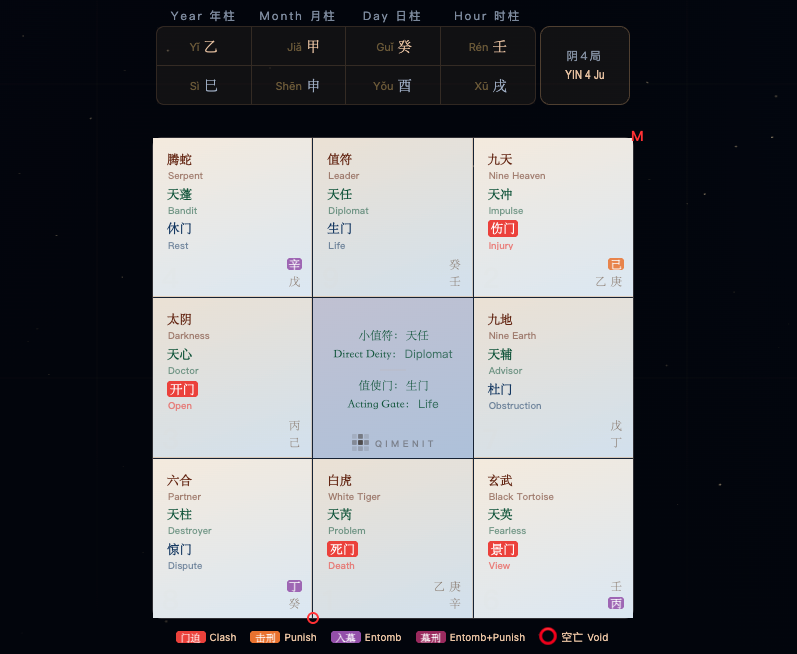
First: Is There a Reason to Move at All
Before weighing two cities, we look for the Horse Star, the symbol that marks movement. It answers a question people rarely put to themselves: does this chart show a change in the making, or only a wish for one? Where the Horse Star is active and clashes your palace, movement is genuinely in the picture. Where the chart is quiet on this, the pull you feel is real enough, yet it is not arising from your circumstances, and a change of city tends not to resolve it.
This first pass earns its own section because it is the one that saves people money. A chart with no movement signal is not telling you your life is fine. It is telling you the answer you are looking for does not sit at the other end of a lease. The same Horse Star logic anchors the job version of this question; when the move is driven by an offer on the table, read it alongside Should I Take This Job Offer?
Who's Who in a Relocation Chart
Five symbols carry the question: you, the dwelling, the two places, and the signal that says whether anything is moving at all.
| Symbol | What it stands for here |
|---|---|
| 驿马Horse Star | Movement: whether a change is actually in the making. |
| 日干Day Stem | You, the one doing the moving. |
| 时干Hour Stem | The dwelling you are moving into. |
| 值符Chief Star | The new home, and the wider setting around it. |
| 值使门Chief Door | The old home you are leaving, and the pace at which the move executes. |
New Place Against Old
Once movement is established, the two places can be weighed against each other. The Chief Star is the new home; the Chief Door is the old one. The comparison is not about which city photographs better. It reads which of the two is presently in better condition, and whether the environment around the new one holds up.
| What the chart shows | How we read it |
|---|---|
| Chief Star strong in season, with an auspicious Door or a Wonder | ✓✓ The new setting is sound, and it holds up over time rather than only at the viewing |
| Chief Star on Void | ✕ The wider environment has a problem, and a good flat inside a poor setting is still a poor move |
| Chief Door on Void | ◐ The old dwelling's main door and flow have a problem, and the place is already hollow; this is often why the question came up at all |
| Hour Stem on Void, the dwelling itself | ✕ A new build not yet finished or occupied; for a place already lived in, a problem has surfaced or will when the void fills |
Note that the Chief Star carries the environment, not the flat. A dwelling that reads well with a hollow Chief Star around it is the apartment you like in a district that is going the wrong way. That is a harder thing to fix than the flat itself.
Does the Place Actually Suit You
The last pass is the one that decides how the years there go. The Day Stem is the person and the Hour Stem is the dwelling: where the two generate each other the place is favourable, and where the dwelling controls the person it is not fit to live in. The full ranking is set out in Should I Buy or Sell This Property?, and it applies unchanged here.
What matters for a move is that this pass runs independently of the other two. The Horse Star can be active and the Chief Star sound, and the Hour Stem can still control your Day Stem. Read together, that is a chart saying the move is real and the destination is wrong, which is a more useful sentence than either half on its own.
Choosing the Day to Move In
Once the decision is made, when to carry the boxes in is a separate question with its own method. It takes the three auspicious Doors — Open, Rest and Life — arriving at the sitting mountain and the main door, with morning hours preferred. The day should not clash the head of the household, the family, or the dwelling itself.
A chart reads the shape of the decision: whether there is a real reason to move, how the two places compare, and whether the destination suits you. It does not survey the building, check the lease or the title, or price the district. Bring it a move you are already weighing and it has something to say. Ask it to replace a viewing and it does not.
Frequently Asked Questions
The chart shows no Horse Star. Does that mean don't move?
It means the chart shows no change in the making, which is a different statement from “stay put and be content.” A quiet chart says the pressure you feel is not arising from your circumstances, so relocating is unlikely to discharge it. That is worth knowing before you sign a lease. Where a move is forced on you by work or family regardless, the reading shifts to the other two passes: how the places compare, and whether the destination suits you.
The new city is objectively better. Why does the chart hesitate?
Because two different things are being weighed and only one of them is objective. The Chief Star reads the setting you are moving into, and it can be sound. The Hour Stem against your Day Stem reads whether that dwelling suits you, and a place can be better by every outside measure while still controlling your palace. Read together, such a chart says the move is real and this particular destination is wrong, which usually means the address needs rethinking rather than the decision.
Which symbol is the new place, and which is the old?
The Chief Star is the new home, the Chief Door is the old one, and the Chief Door carries the old dwelling's main door and the flow through it. The Chief Star on Void says the wider environment around the new place has a problem; the Chief Door on Void says the old dwelling's entrance and circulation have gone wrong and the place is already hollow, which is frequently why the question arose. The dwelling itself, as distinct from the setting, sits on the Hour Stem.
When should I actually move in?
That is a separate question with its own method. It takes the three auspicious Doors — Open, Rest and Life — arriving at the sitting mountain and the main door, with morning hours preferred, and the day should not clash the head of the household, the family, or the dwelling. Deciding whether to move and choosing the day to move are two readings; running them together is how people end up with a good date for a move that was never right.
Wondering why a traditional system is being used to weigh a decision at all? That question is taken up separately in divination for decision making, which covers what each of these systems is suited to and where the category has to stop.
If this is the decision on your table tonight, choose Decision-making · Act or hold and cast a free chart. The verdict comes back as go, wait, or stop — with the reasons, each signal explained in plain language. See what a full reading looks like →
Cast a Free Chart →